Login
Login
The Lovey - The Story Behind the Most Important Object in the World (Your Baby's World, That Is)
A Lovey Isn't Just Cute: Why Every Baby Needs a "Best Friend"
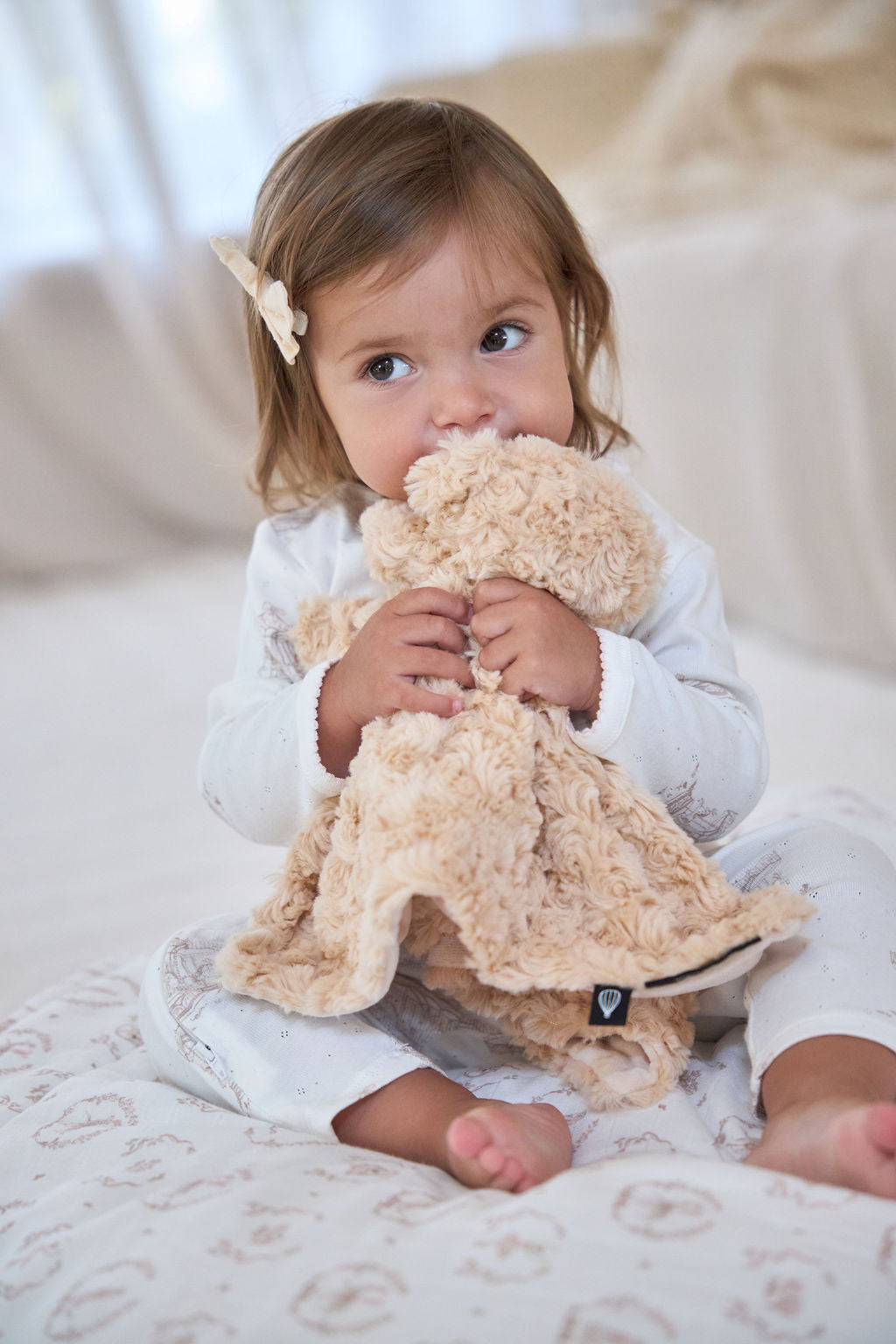
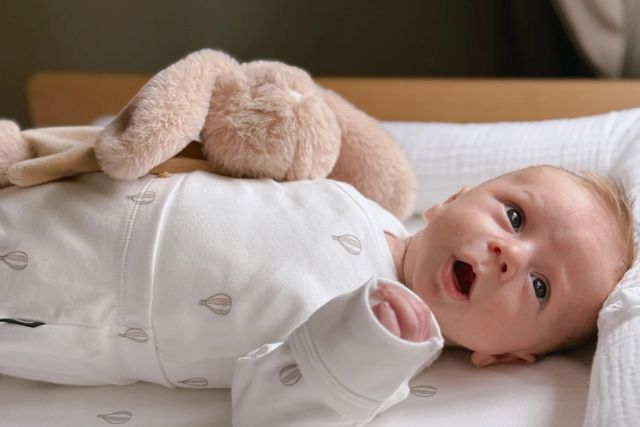
There's a moment every parent knows: baby holds the lovey, brings it up to their face, and settles. In that second you understood this is no longer just a textile item. It's a friend.
What Is a "Transitional Object," Exactly?
Psychologists call it a Transitional Object an item that helps baby bridge the distance between the security of mom and dad's arms and the independence of sleeping alone. The familiar scent, the soft texture, and the constant presence give baby a sense of security even when you're not in the room.
How Does a Lovey Help with Sleep?
Babies with a consistent transitional object tend to fall asleep more easily and cope better with night wakings. The lovey becomes part of the bedtime routine: same touch, same scent, same signal that it's time to sleep.
When Do You Introduce a Lovey?
You can introduce the lovey from the very first months during wind-down time, in your arms. Important: according to safe sleep guidelines, soft objects stay out of the crib in the first months, and the lovey joins the bed only in line with standard age recommendations.
The Tip Worth Gold: Buy Two
The day the beloved lovey gets left at daycare, lost on a trip, or urgently needs a wash you'll thank us. A backup lovey = a quiet night guaranteed.
How to Choose One?
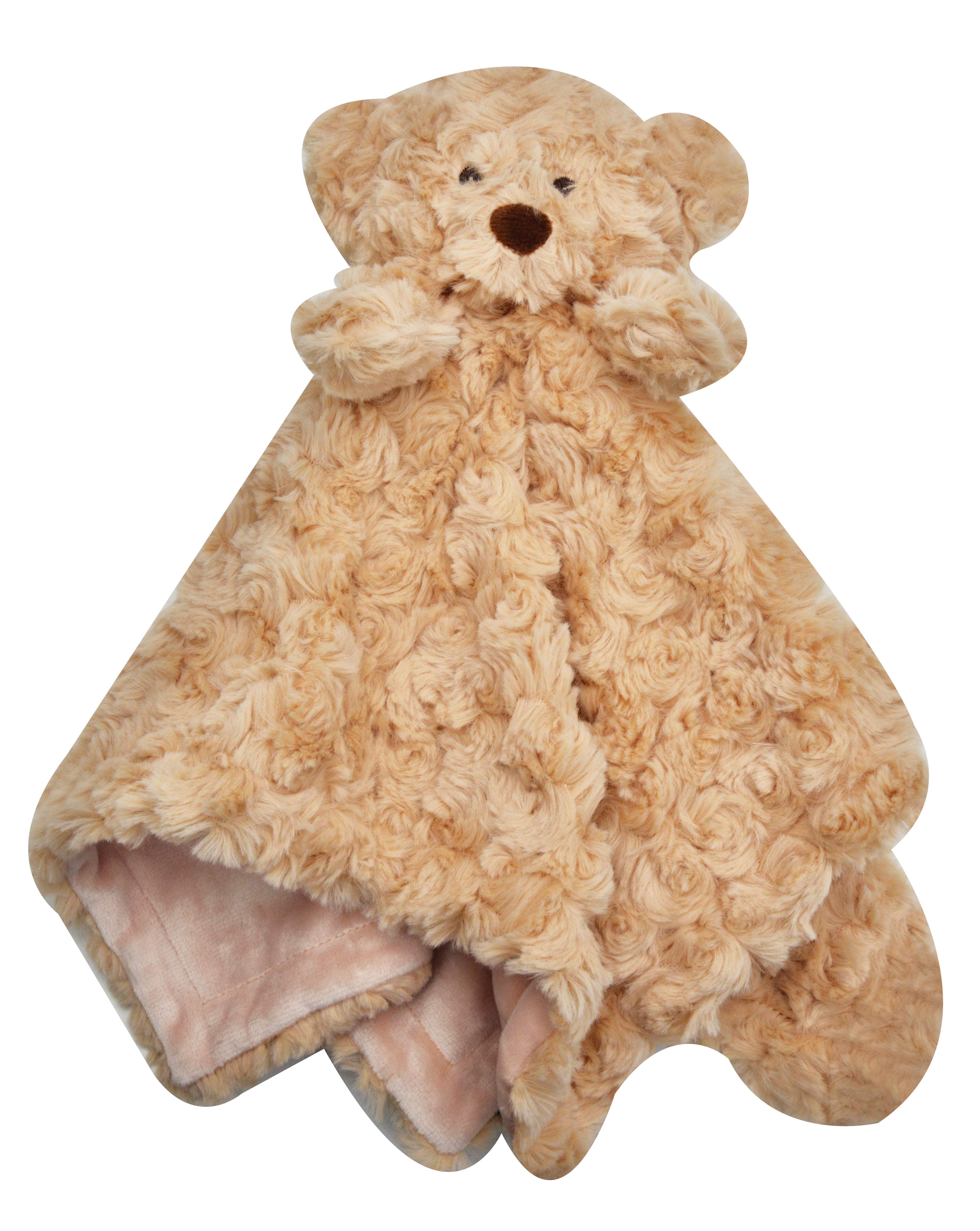
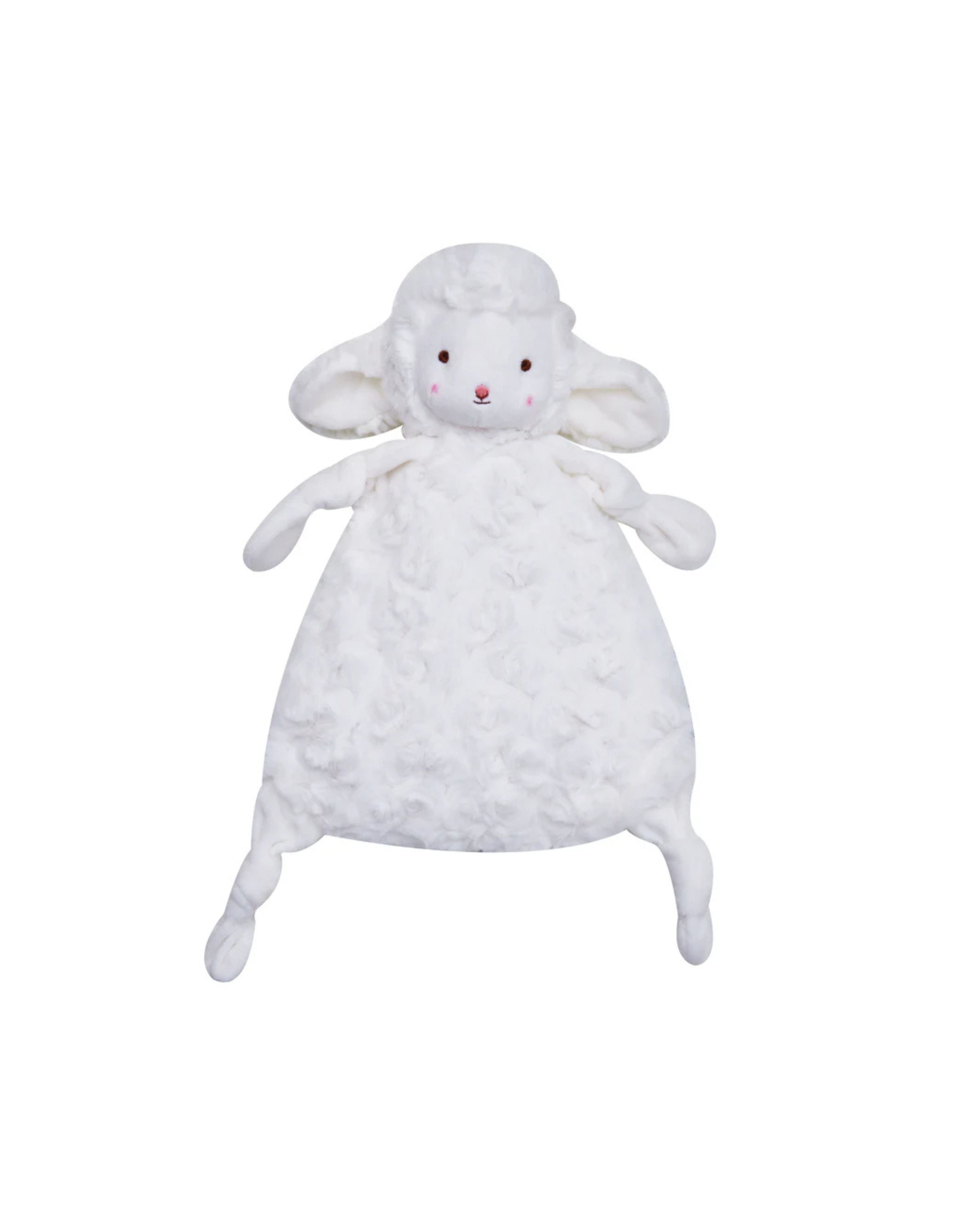
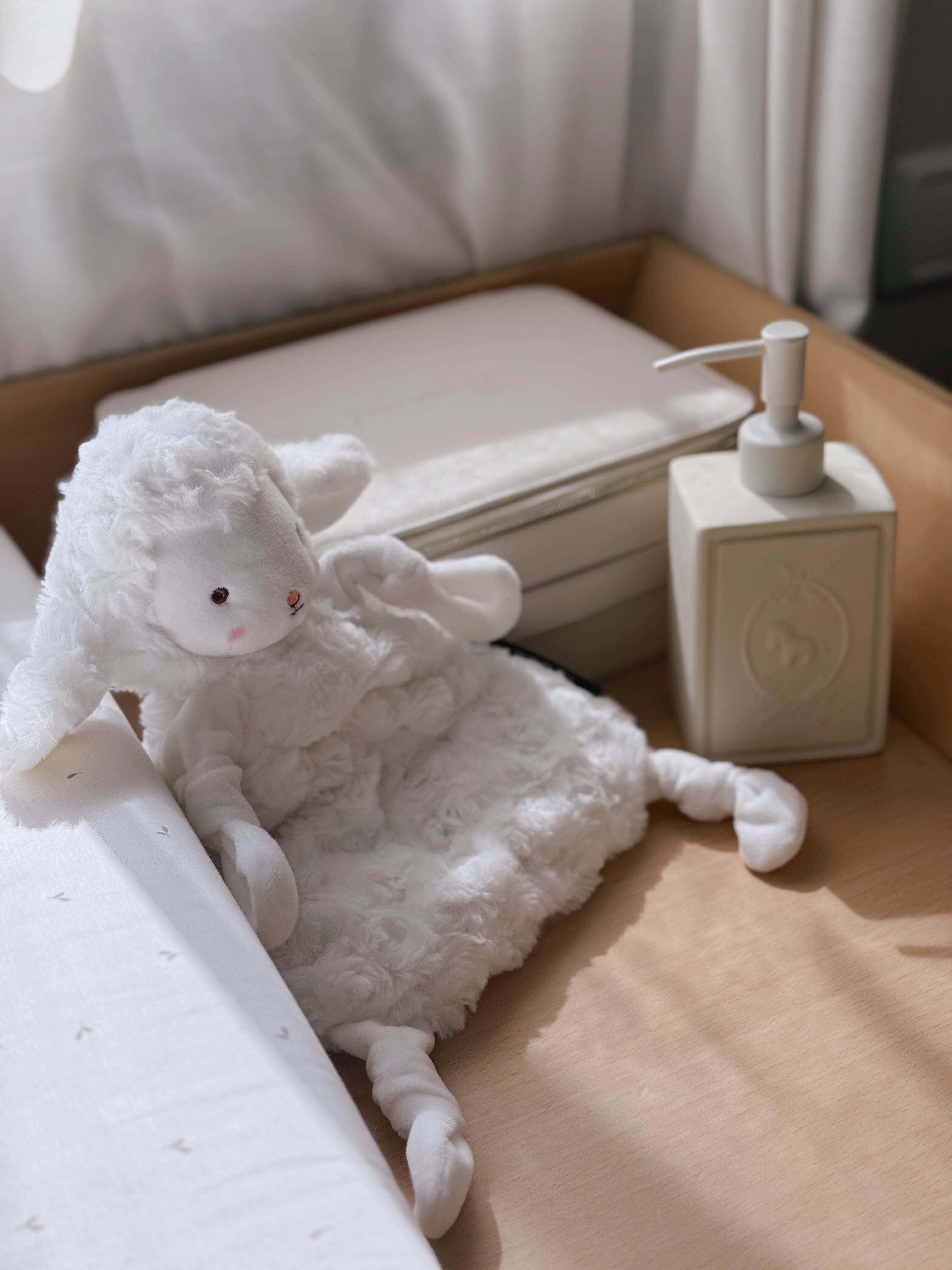
An extra-soft texture, a size that's easy for little hands to grip, and a sweet character that's easy to bond with. Take Me Home's teddy and lamb loveys were designed exactly that way soft, sweet, and built to survive endless washes.
Because a true friend needs to last for years.